How much do social media ads cost? CPM, CPC and budgets explained

·7 min read
Social media ads don't have a fixed price: you set a budget and pay through an auction, usually per thousand impressions (CPM) or per click (CPC). What you actually pay depends on your country, audience, season, competition and how relevant your ad is, so the smart way to start is a small test budget, then scale what works.
That answer can feel frustrating if you just want a number. But once you understand how the pricing works, you can plan a budget with confidence, avoid wasting money in your first campaign, and know whether your ads are actually paying for themselves. This guide explains the pricing models, the auction, the factors that push costs up or down, and a simple way to set and judge a budget.
The three ways you pay for social media ads
Meta (Facebook and Instagram), TikTok, LinkedIn, YouTube and Google all use similar pricing ideas, even if the buttons have different names. You'll see these three terms everywhere:
| Model | What you pay for | Good for |
|---|---|---|
| CPM — cost per mille | Every 1,000 times your ad is shown | Awareness, reach and video views |
| CPC — cost per click | Each click to your website, WhatsApp or app | Traffic and enquiries |
| CPA — cost per action | The result you care about, such as a purchase, lead or sign-up | Sales and leads |
In practice, most platforms charge you on impressions behind the scenes and let you optimise for clicks or conversions. When you choose a conversions objective, the platform shows your ad to the people it thinks are most likely to act, and your reports show what each result cost. So CPA is often something you measure and aim for, rather than a fixed price you're billed.
How the ad auction works
Every time someone opens Instagram, TikTok or YouTube, there's an ad slot to fill. The platform runs a quick auction among all the advertisers who want to reach that person. The winner is not simply the highest bidder. Platforms weigh three things:
- Your bid or budget — how much you're willing to pay for the result.
- Estimated action rate — how likely this person is to click, watch or buy.
- Ad quality and relevance — whether people engage with your ad or hide it. Google calls a similar idea Quality Score.
This is good news for small businesses. A clear, relevant ad can win auctions against bigger advertisers and pay less for the same result. A dull or misleading ad pays more, even with a big budget.
What drives the cost of social media ads
Country and city
Costs vary widely between countries because advertiser demand and purchasing power differ. Targeting people in Pakistan generally costs differently from targeting the UK or the Gulf, and big cities can differ from smaller towns. If you sell to overseas Pakistanis, expect to pay the rates of the country they live in, not Pakistan's.
Audience size and competition
A very narrow audience — say, one profession in one city — means fewer people to show ads to and more advertisers competing for them. A very broad audience is cheaper to reach but may include many people who will never buy. Many advertisers find a middle ground and let the platform's targeting do more of the work as results come in.
Season and big sale dates
When lots of brands advertise at once, auctions get crowded and prices rise. In Pakistan that usually means Ramadan and Eid, wedding season, 11.11 and Black Friday sales, and back-to-school. Plan these campaigns early, build your audience before the rush, and expect to pay more per result during the peak. Our free social media holiday calendar helps you see these dates coming.
Ad quality and creative
Strong creative is one of the few cost levers fully in your control. A scroll-stopping first second, a clear offer and a simple call to action tend to earn more engagement, which platforms reward. Showing the same ad too often raises frequency and people start ignoring it, so refresh creative regularly.
Objective and placement
Asking for awareness is usually cheaper per impression than asking for purchases, because fewer people buy than watch. Placement matters too: Stories, Reels, feeds, YouTube in-stream and search ads all have their own auctions. Automatic placements let the platform find cheaper inventory; manual placements give you control but can raise costs.
How to set a starting budget (worked example)
Instead of guessing a budget, work backwards from the result you want. Here's a simple method. The numbers below are made-up round figures for illustration only — your real costs will be different.
- Decide the goal. For example: 20 WhatsApp enquiries for a clothing brand in a week.
- Estimate your conversion rate. If, in this example, 1 in 10 people who click ends up messaging you, your conversion rate is 10%.
- Work out the clicks needed. 20 enquiries ÷ 10% = 200 clicks.
- Multiply by an assumed CPC. If your CPC were $0.20, 200 clicks would cost about $40 for the week.
- Add room to learn. Platforms need time and data to optimise, so give the test a few days before judging it and avoid changing settings daily.
After the first week, replace the assumed numbers with your real ones. If your actual CPC was higher, or fewer clickers messaged you, you'll know exactly which part to fix — the ad, the targeting or the landing page.
How to judge whether your ads are working
Cheap clicks are not the goal. Profitable customers are. Two numbers matter most:
- CPA compared with customer value. If a customer is worth more to you than it costs to win them — including repeat orders — the ads are working, even if the CPA looks high.
- [ROAS](/glossary/roas) — return on ad spend. Revenue from ads divided by ad spend. In a made-up example, $40 of ads that bring in $160 of sales is a ROAS of 4. Whether that's profitable depends on your margins, so compare it with your costs, not with someone else's ROAS.
To measure this properly, tag your links with UTM parameters so you can see in your analytics which ad sent which visitor, and set up the platform's conversion tracking. For a wider view of whether your whole social effort pays off, the social media ROI calculator is a quick check.
Manage ad spend across platforms in one place
Most businesses end up running ads on more than one network, and jumping between dashboards makes it hard to compare costs. Postsiva's Ads Manager lets you work with Google Ads, Meta Ads and TikTok Ads from the same place you schedule organic posts. Not sure which platform to start with? Read our comparison of Google Ads vs Meta Ads vs TikTok Ads.
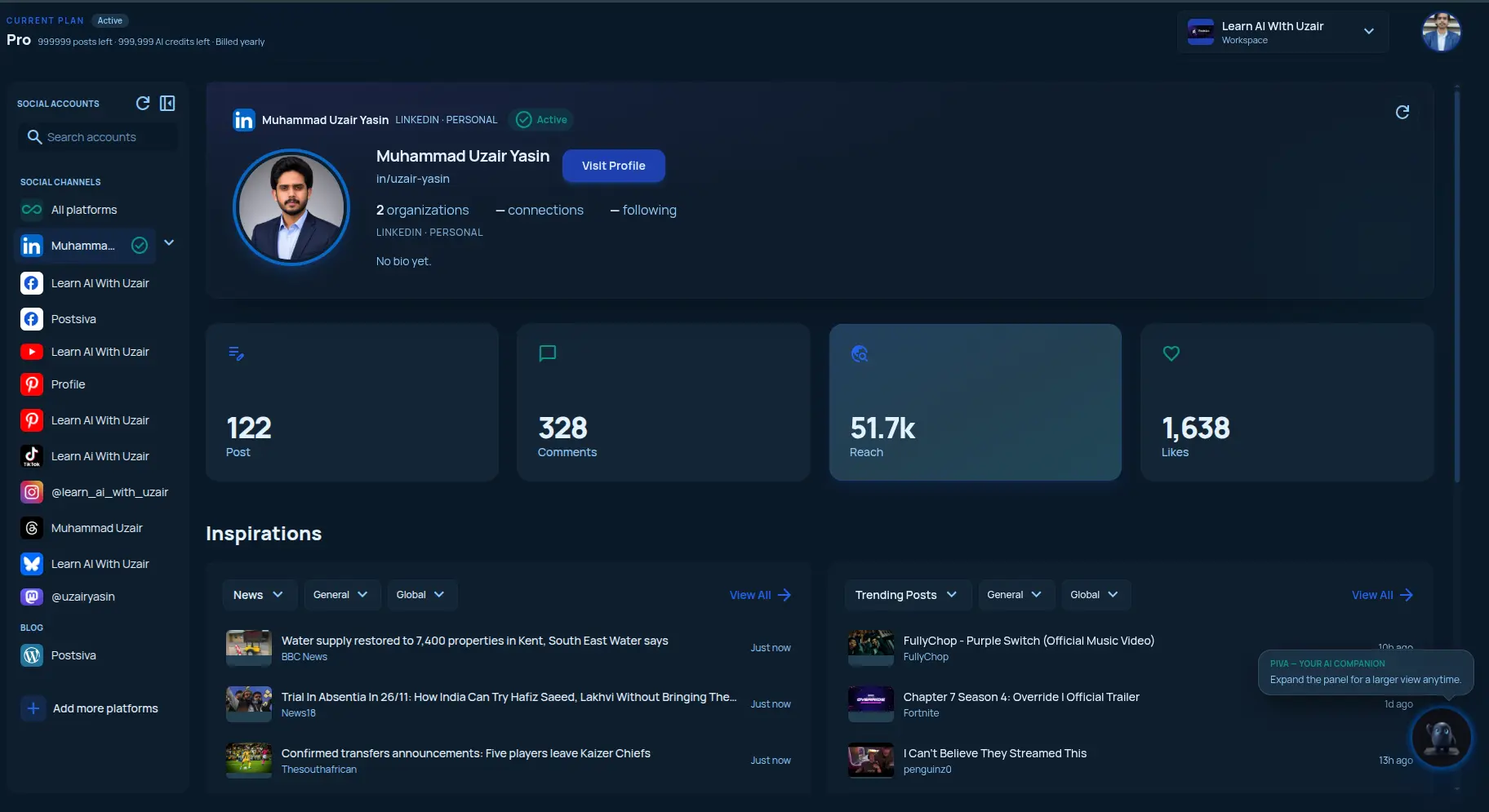
Organic posting still matters when you advertise: an active profile with real engagement makes your ads more believable, and posts that do well organically are often the best candidates to boost. Plans start free, with Starter at $10/month and Pro at $29/month — see pricing.
Common budgeting mistakes to avoid
- Judging a campaign after one day. Early results swing a lot. Give tests enough time and data.
- Splitting a small budget across too many ads. Each ad gets too little spend to learn. Test two or three versions with A/B testing instead.
- Chasing the lowest CPC. Cheap clicks from the wrong people cost more in the end than fewer, better clicks.
- Forgetting retargeting. People who already visited or engaged are often more likely to buy; retargeting them is usually worth a share of the budget.
Frequently asked questions
What is a good CPM or CPC?
There's no universal good number, because costs vary by country, audience, season and competition. A good CPC or CPM is one that lets you win customers for less than they're worth to your business.
How much should I spend on my first ad campaign?
Start with a small test budget you're comfortable losing while you learn, work backwards from your goal using the method above, and scale only the ads that bring results.
Why did my ad costs suddenly go up?
Common reasons are seasonal competition such as Ramadan, Eid or 11.11, an audience that's too narrow, or tired creative with high frequency. Refresh the ad and review your targeting.
Can I estimate my ad costs before spending?
Yes. Use the free Postsiva ad cost calculator with your own CPM or CPC estimates to see roughly what a budget could deliver, then update it with real numbers after your first test.